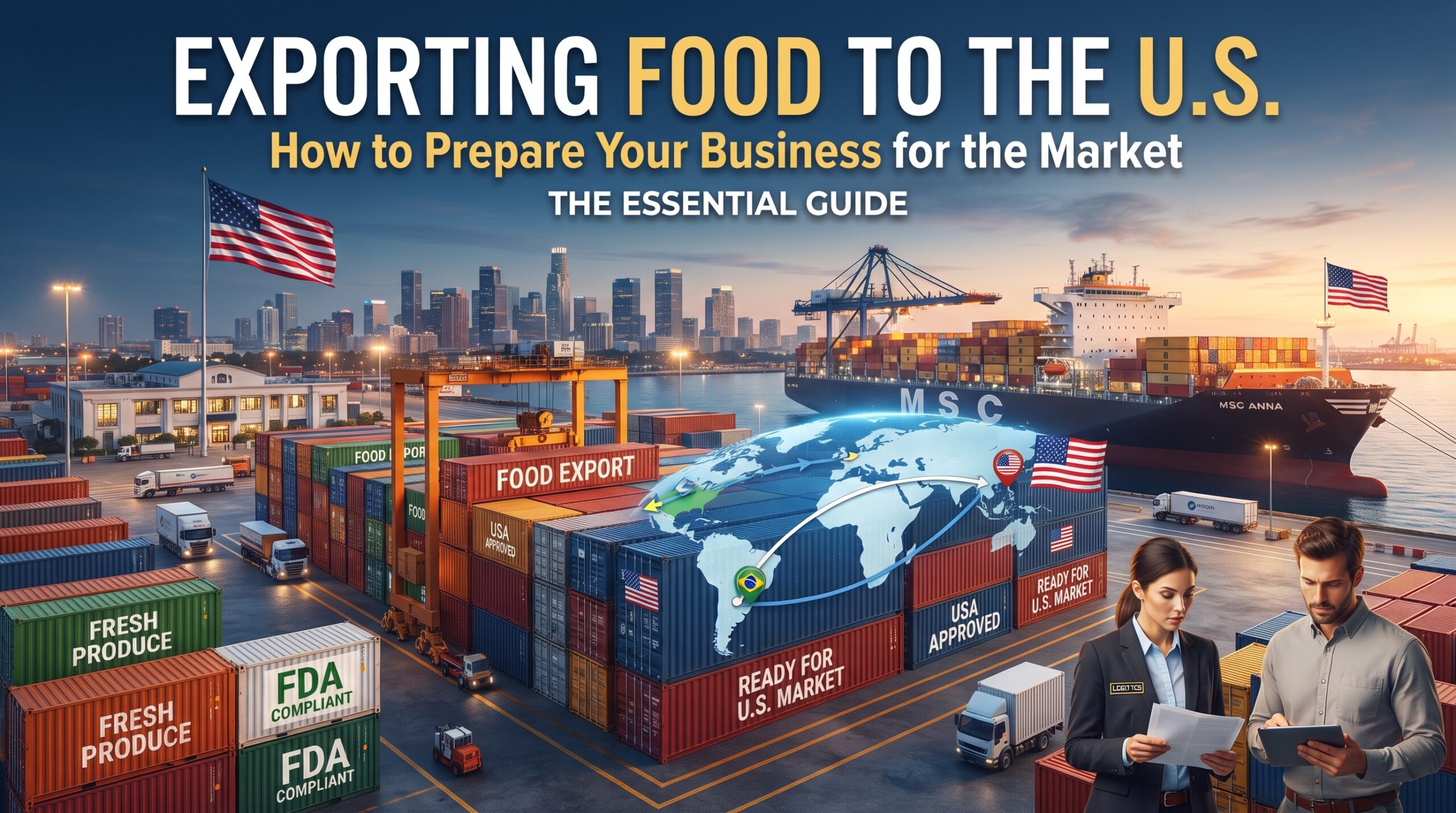
Exporting food to the United States takes more than a good product. Companies also need to understand applicable food-safety requirements, labeling, import documentation, logistics, and costs. Planning these details early can help businesses make more informed decisions and build a stronger path to market.
For companies exploring the U.S. market, an experienced importer and distributor can be a valuable partner. Triunfo Foods has worked with imported foods in the United States since 1975, building experience in importing and distributing products for diverse communities and customer groups. That history gives businesses a knowledgeable partner to discuss market fit, distribution, and the practical considerations of bringing food products to U.S. consumers. Triunfo Foods Company profile
What should companies consider before exporting food to the U.S.?
Requirements depend on the product, the facility, and the way the food is imported. Before moving forward, exporters should work with their U.S. importer and qualified regulatory or customs professionals to clarify responsibilities and review the relevant requirements.
1. FDA food facility registration
Facilities that manufacture, process, pack, or hold food for consumption in the United States may need to register with the FDA, unless an exemption applies. Facilities subject to registration must renew it every two years during the period from October 1 through December 31 of even-numbered years. For 2026, the renewal deadline is December 31.
What to do: Confirm whether each relevant facility must register, check that its information is accurate, and complete any required renewal before the deadline.
2. Labeling and product information
Imported foods must meet applicable U.S. requirements. Labeling, ingredient declarations, and other product information should be reviewed for the specific food and intended market before shipment. Requirements vary, so companies should confirm them with their importer and qualified regulatory advisers. FDA
What to do: Review the label and supporting product information before printing packaging or arranging a shipment.
3. Prior Notice and shipment details
Food shipments generally require Prior Notice to the FDA, subject to regulatory exceptions. The details required can vary by shipping method. For example, FDA guidance specifies additional information for food arriving through international mail.
What to do: Confirm who will submit Prior Notice, what information is required, and when it must be provided for the chosen shipping method.
4. Traceability and records
Additional traceability records apply to certain foods covered by the FDA’s Food Traceability Rule, subject to the rule’s scope and exceptions. Not every food product is covered in the same way. Companies should determine whether their products are affected and what records their supply chain needs. FDA
What to do: Review product coverage and organize information about lots, suppliers, shipments, and destinations as required for the product and operation.
Plan landed costs before setting a price
The cost of entering the U.S. market involves more than the product price. Freight, insurance, customs duties, brokerage, inland transportation, storage, and other operational costs can affect the final economics.
Tariffs and customs requirements can change and may vary by product classification, origin, and date of entry. Avoid relying on a single general tariff estimate for all foods from a particular country. Ask a qualified customs broker to review the product’s classification and calculate the expected costs for the specific shipment.
Why work with an experienced U.S. partner?
Entering a new market involves both compliance planning and commercial decisions: understanding the intended customers, selecting appropriate products, coordinating documentation, and planning distribution.
Triunfo Foods has been importing and distributing products in the United States since 1975. The company’s experience serving a range of communities with imported products from different regions provides a foundation for conversations with businesses exploring the U.S. market. Triunfo Foods Company profile
For exporters, a potential partner should be able to discuss questions such as:
- Does the product fit the intended customer and channel?
- What product information and documentation should be prepared?
- What packaging, shelf-life, and storage factors need consideration?
- What distribution and replenishment requirements might apply?
- Which professionals should review regulatory and customs questions?
Triunfo Foods can be a partner for businesses exploring export and distribution opportunities in the United States. Product acceptance, regulatory compliance, and commercial terms depend on the product and the parties involved; these should be evaluated individually.
Export-readiness checklist
| Area | What to review |
|---|---|
| Product and market fit | Identify the target customer, channel, and potential use occasions |
| FDA registration | Confirm whether applicable facilities must register or renew |
| Importer coordination | Clarify roles and documentation needs, including FSVP-related information |
| Labeling | Review product labels and information for applicable U.S. requirements |
| Prior Notice | Confirm the responsible party and required shipment details |
| Traceability | Determine whether the product is covered by additional requirements |
| Costs and logistics | Request a shipment-specific customs and landed-cost estimate |
| Distribution | Discuss storage, shelf life, service area, and replenishment needs |
Frequently asked questions
What do companies need to export food to the United States?
The requirements depend on the product and operation. They may include facility registration, compliant labeling, Prior Notice, importer verification responsibilities, and product-specific records. Companies should confirm the applicable requirements with their importer and qualified professionals. FDA
Does every food facility need FDA registration?
Not necessarily. Facilities that manufacture, process, pack, or hold food for U.S. consumption may be required to register, but exemptions apply. Confirm whether the specific facility and operation are covered. FDA
What is FSVP?
The Foreign Supplier Verification Program is an FDA rule requiring covered U.S. importers to conduct risk-based verification of foreign suppliers. Exporters may need to provide information that helps the importer meet those responsibilities. FDA
How can Triunfo Foods support companies exploring the U.S. market?
Triunfo Foods has operated in U.S. food importing and distribution since 1975. Businesses can contact the company to discuss potential product and distribution opportunities. Regulatory, labeling, and customs requirements should be confirmed with the appropriate specialists for each product and shipment. Triunfo Foods
Build your U.S. market plan with the right partner
Export preparation is most effective when product, documentation, costs, and distribution are considered together. Triunfo Foods’ history in importing and distributing food in the United States makes the company a potential partner for businesses evaluating how to approach the market.
Explore Triunfo Foods and contact the team to discuss your products and potential opportunities.
This article is for informational purposes only and is not legal, regulatory, customs, or tax advice. Requirements and tariffs may vary by product, shipment, and date. Confirm current obligations with the relevant authorities and qualified professionals.
Sources
- FDA: Biennial food facility registration renewal requirements
- FDA: Importing food products into the United States
- FDA: Foreign Supplier Verification Programs
- FDA: Importing human foods
- FDA: Prior Notice of imported foods
- FDA: Food Traceability Rule FAQs
- Triunfo Foods
- Triunfo Foods company profile