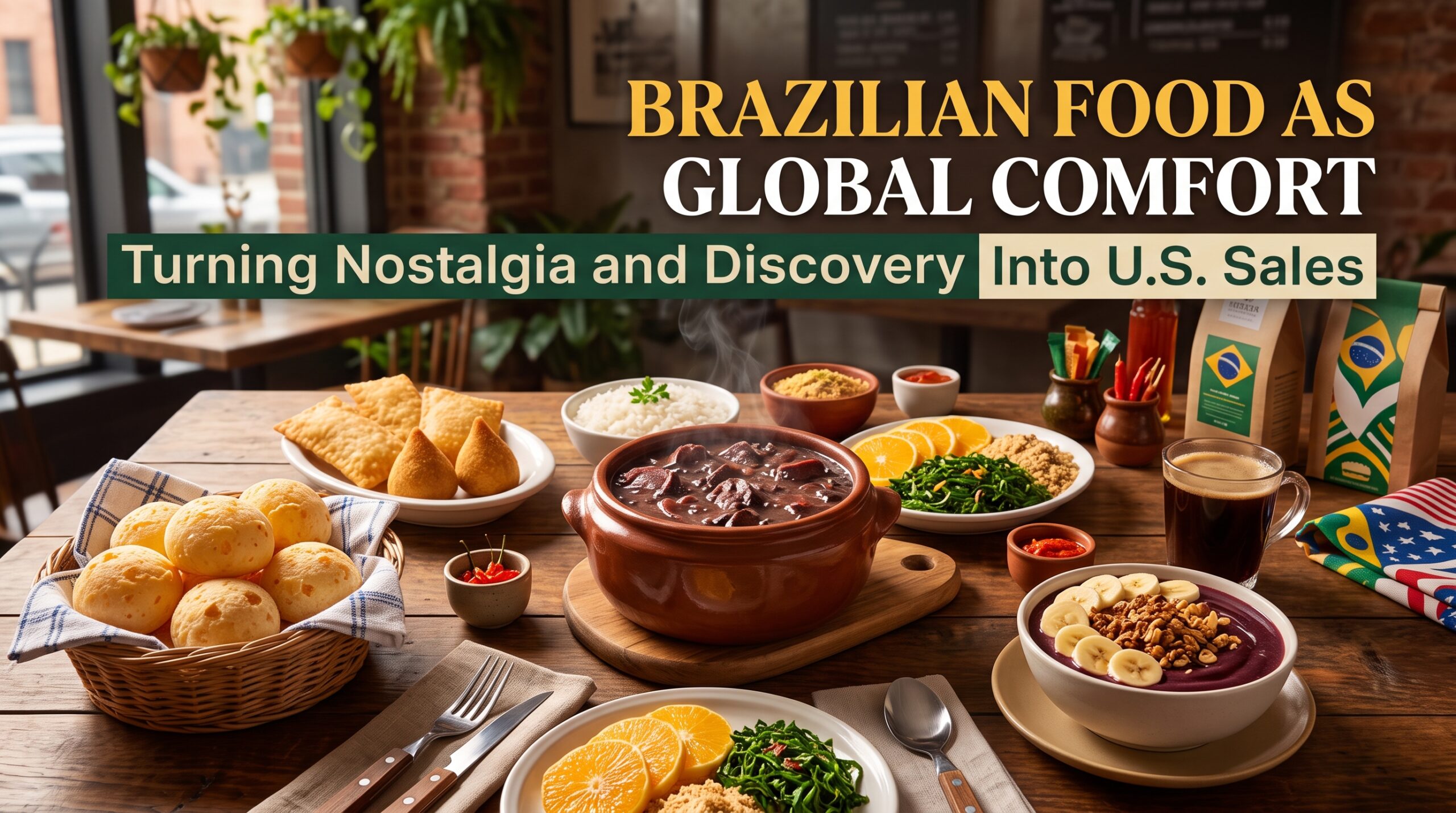
Selling Brazilian food in the United States is no longer just about serving a community that misses the flavors of home. Brazilian products can also introduce American consumers to a cuisine built around comfort, family meals, celebration and everyday convenience.
For grocery stores, specialty markets, distributors and food service operators, the opportunity is to position Brazilian food as global comfort food: familiar in its emotional appeal, authentic in its origin and practical in the way it fits into daily life.
This approach matters because consumer interest is shifting. Diners and shoppers are looking beyond broad “international” categories and toward more specific cuisines, regional ingredients and authentic experiences. At the same time, they want convenient formats that make it easy to try something new.
Why Brazilian food fits today’s market
Consumers want specific global cuisines
“Ethnic food” is too broad to describe what consumers are looking for today. Interest is moving toward identifiable cuisines and ingredients: Brazilian, Peruvian, Korean, Southeast Asian, Middle Eastern and other regional food cultures.
The Institute of Food Technologists highlights that authentic global cuisines are replacing broad, Americanized versions of international food. For Brazilian brands and retailers, this creates an opportunity to communicate origin clearly — not simply as “Latin food,” but as Brazilian food with its own flavors, traditions and occasions.ift
Terms such as pão de queijo, guaraná, açaí, farofa, brigadeiro and churrasco can become part of the consumer’s vocabulary when they are paired with a simple explanation in English.
Comfort food is a growing category
Brazilian food naturally connects to comfort. A warm cup of Brazilian coffee, a freshly baked cheese bread, a family-style meal or a sweet treat can evoke memory, celebration and a sense of home.
The National Restaurant Association identifies comfort, nostalgia, value and global flavors as major trends shaping 2026. The association also points to “global comfort foods” — familiar home-style dishes from around the world, reimagined with authenticity and local influence.restaurant
For Brazilian food, this creates a strong positioning:
Authentic Brazilian flavors, made easy for everyday American life.
Instead of presenting products only as exotic or imported, retailers can connect them to familiar occasions: breakfast, snacks, weekend barbecues, family dinners, celebrations and on-the-go treats.
Convenience turns curiosity into repeat purchases
Many consumers are open to trying new flavors, but they need clarity. They want to know how to use a product, what it pairs with and how it fits into their routine.
A recent FMI report found that one in four shoppers believes their grocer’s prepared-food section lacks variety, particularly in health-focused options and global cuisines. That gap is an opportunity for Brazilian products that are easy to prepare, portion and enjoy.
Practical formats include:
- Frozen cheese bread and savory snacks
- Açaí pulp and smoothie-ready products
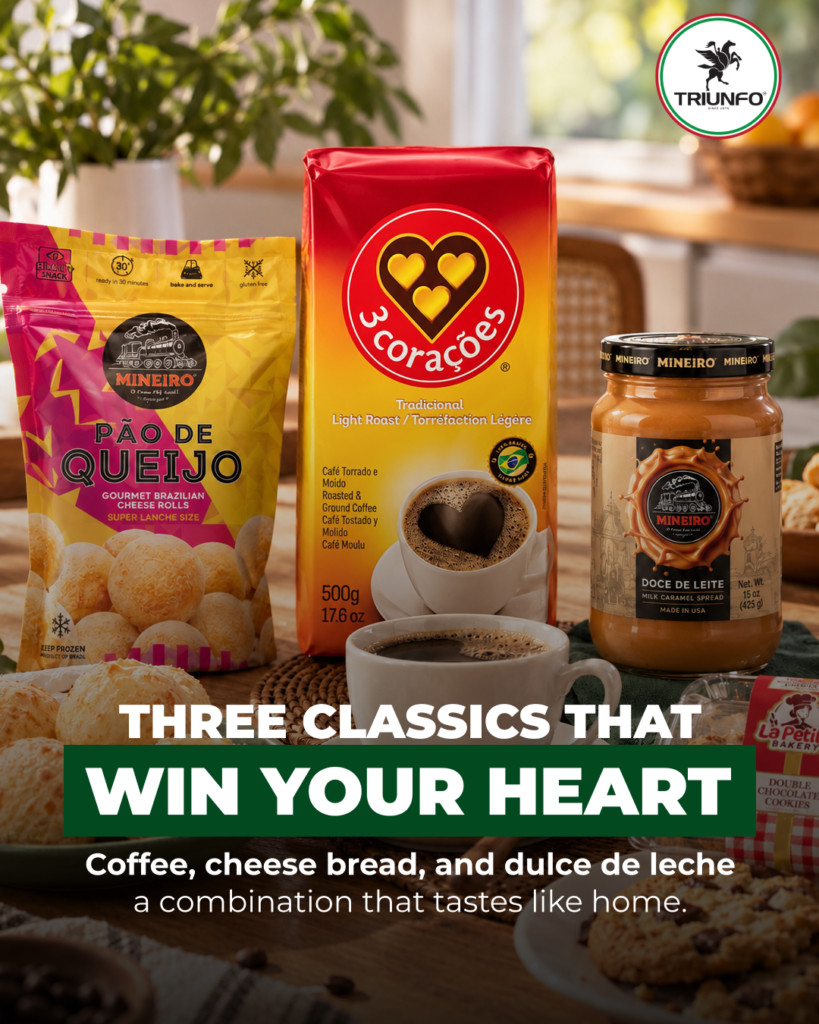
- Breakfast kits with coffee, bread and spreads
- Sauces, seasonings and farofa with simple usage suggestions
- Individually packaged sweets and desserts
- Barbecue and grilling essentials
- Ready-to-eat or heat-and-eat options
Technomic also expects smaller portions, snacks and shareable formats to become more relevant in U.S. food service in 2026. This supports individual packaging, multipacks and kits designed for families, gatherings or on-the-go consumption.
How to position Brazilian products
Lead with the occasion, not just the ingredient
A product becomes easier to understand when it is connected to a real moment of consumption.
Instead of only saying:
“Brazilian cheese bread.”
Say:
“Brazilian cheese bread: a warm, naturally gluten-free snack ready in minutes.”
Instead of only saying:
“Guaraná soda.”
Say:
“Brazilian guaraná: a refreshing, lightly fruity soda popular in Brazil.”
Instead of only saying:
“Farofa.”
Say:
“Brazilian farofa: a toasted cassava-flour side dish for barbecue, rice, beans and everyday meals.”
This does not remove the cultural identity of the product. It creates a bridge between the product and a consumer who may be discovering Brazilian food for the first time.
Make the first purchase easy
The goal is to reduce hesitation before the customer reaches the checkout. Clear packaging, simple recipes and helpful shelf communication can make the difference between curiosity and a sale.
Retailers and brands can use:
- Short English descriptions on packaging
- QR codes linking to quick recipes or preparation videos
- Shelf talkers explaining what the product is and how to use it
- In-store tastings where operationally feasible
- Recipe cards with simple pairings
- Social media content showing real preparation and serving ideas
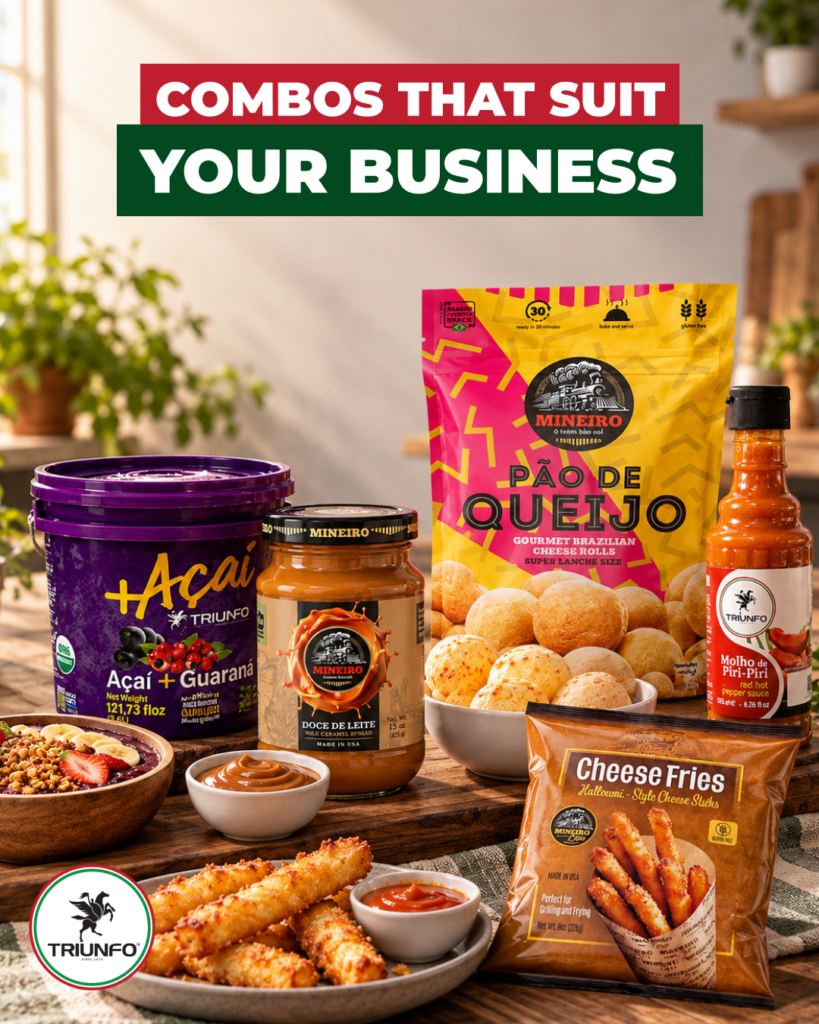
- Bundles that combine complementary products
A customer who understands how to use a product is more likely to buy it again.
Build baskets, not single-item sales
Brazilian food becomes more compelling when products work together. A cheese bread purchase can lead to coffee. A barbecue purchase can lead to farofa, sauces and beverages. A dessert can lead to coffee, tea or a celebratory snack.
Retailers can create simple merchandising opportunities around:
- Brazilian breakfast: coffee, cheese bread, spreads and sweets
- Brazilian barbecue: farofa, sauces, seasonings and beverages
- Snack time: cookies, chocolates, guaraná and savory snacks
- Family meals: rice, beans, seasonings, sauces and side dishes
- Celebrations: sweets, beverages, snacks and party-ready items
These combinations increase basket size and help customers discover products they might not have noticed otherwise.
What this means for retailers and food service
For retailers, the opportunity is to treat Brazilian food as a category with a clear story: comfort, authenticity and convenience. For restaurants, cafés, bakeries and food service operators, it is an opportunity to introduce recognizable Brazilian flavors in menu items that are easy to execute.
Value remains important, but it is not only about the lowest price. Consumers increasingly evaluate value through taste, convenience, quality and experience. The National Restaurant Association identifies value, convenience and global flavors as central themes for 2026.restaurant
A Brazilian product can justify its place on the shelf when it delivers:
- A distinctive and authentic flavor
- A clear use case
- Convenient preparation or consumption
- A connection to culture and tradition
- A reason to return and buy again
How to test Brazilian products in your store
You do not need to overhaul your entire assortment to test the opportunity. Start with a focused selection that matches your customer base, shelf space and operational capacity.
Track:
- Units sold per week
- Gross margin by product
- Replenishment needs
- Waste, spoilage and expiration
- Customer feedback
- Sales of complementary products
These indicators help distinguish a short-term novelty from a product with recurring demand. The decision to expand the assortment should be based on your own sales data, customer profile and operational results.
Bring authentic Brazilian flavors to your shelves
Brazilian food has a natural place in the growing demand for global comfort food. It offers familiar emotional appeal, distinctive flavors and practical formats for modern American consumers.
Looking to add authentic Brazilian products to your store, market or food service operation? Explore the Trendsetter Brands from Triunfo Foods and speak with our commercial team about available products, formats and wholesale opportunities.
**Market data reflects broader industry trends and does not constitute a guarantee of sales performance for any specific product or brand.
| Source | How it supports the article |
|---|---|
| Institute of Food Technologists — Outlook 2026: Flavor Trends | Shows that consumers are moving away from broad, Americanized versions of international cuisine and toward more specific, authentic global cuisines. ift |
| National Restaurant Association — What’s Hot in 2026: Comfort, Health and Value | Identifies comfort, nostalgia, value, convenience and global flavors as leading U.S. food trends for 2026. restaurant |
| Grocery Dive — Where are the gaps in grocers’ prepared food offerings? | Reports FMI findings that shoppers want more variety in prepared foods, especially in health-focused products and global cuisines. |
| Technomic — 2026 U.S. Foodservice Trend Predictions | Highlights the growing relevance of smaller portions, snacks, shareable formats and changing consumption patterns in food service. |
| Grand View Research — Ethnic Food Market Size, Share & Trends Report, 2026–2033 | Provides market-size context for the global ethnic food category and its projected growth through 2033. |