Learn what goes into landed cost—and how to evaluate pricing, logistics, and distribution before shipping food products to the American market.
How much does it cost to bring a food product into the United States?
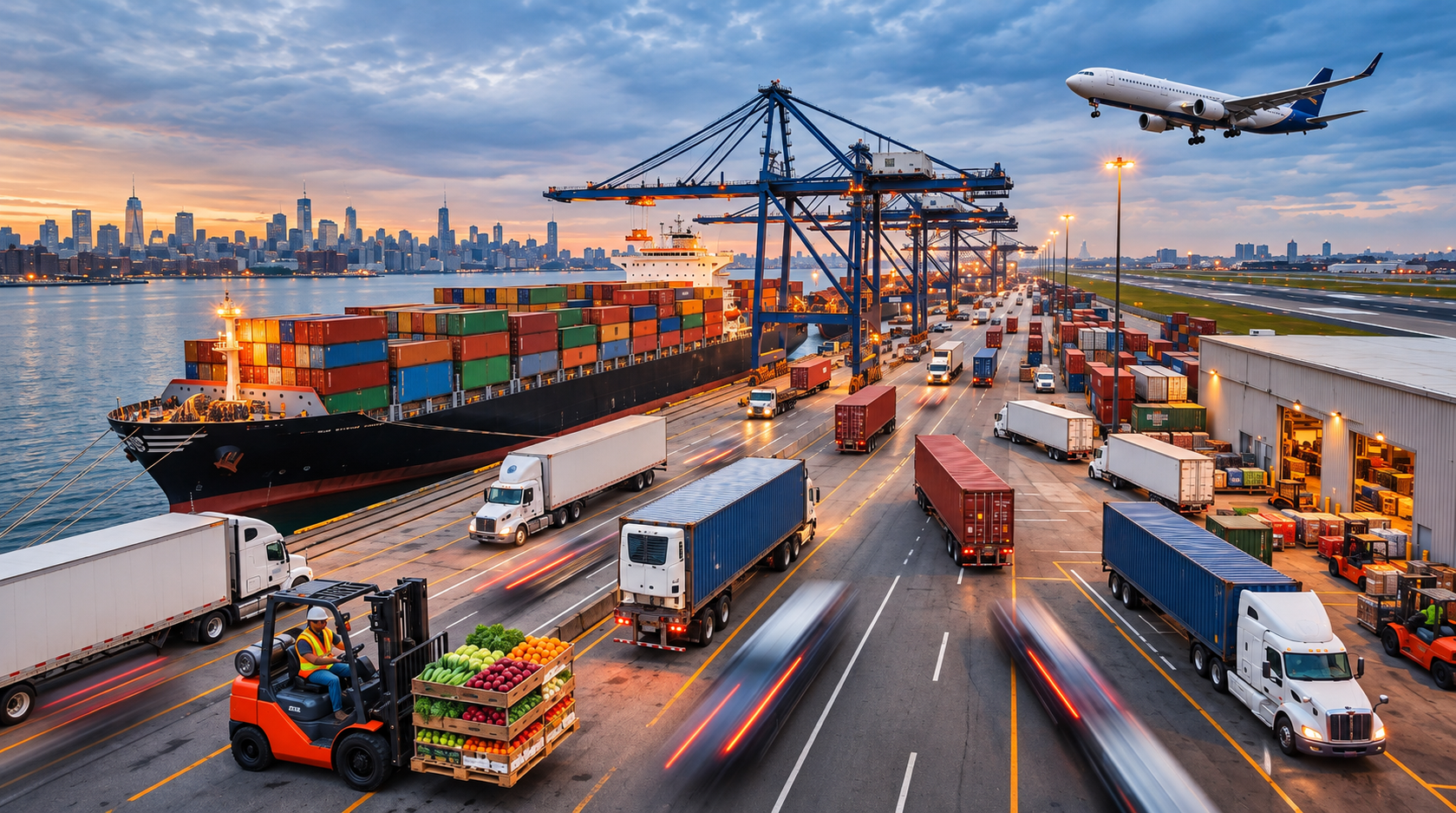
The supplier’s price and the customs duty are only part of the answer. A complete estimate also needs to account for transportation, customs-related fees, clearance services, inland delivery, storage, and any product-specific requirements.
For food producers and brands, overlooking those expenses can lead to a difficult outcome: a product that looks competitive at the factory but becomes too expensive by the time it reaches its intended sales channel.
The starting point is landed cost—a calculation that brings those expenses together before you commit to an order.
What Is Landed Cost for Imported Food?
For purchasing purposes, landed cost is the total estimated cost of getting a product to a defined destination.
That destination matters. A quote covering delivery to the port is not equivalent to one covering delivery to a distributor’s warehouse or a retail location.
Define what the calculation includes before comparing suppliers or shipping options. Keep the customs value used for duty calculations separate from your broader commercial cost model.
Which Costs Should You Include?
| Cost category | What to confirm |
|---|---|
| Product purchase | Price, packaging, case quantities, and supplier terms |
| International transportation | Freight, handling, insurance, and service scope |
| Customs duties | Classification, origin, and applicable tariff measures |
| Customs-related fees | Processing and port-related charges, where applicable |
| Clearance services | Broker and other service-provider charges |
| Product readiness | Label review, documentation, and any necessary adjustments |
| U.S. transportation and storage | Delivery destination, storage conditions, and quoted services |
| Loss allowance | Expected damage, spoilage, or other unsellable units |
This is a planning checklist, not a list of charges that applies identically to every shipment.
Import requirements vary by food type, country of origin, and applicable restrictions. CBP recommends consulting the relevant import specialists and agencies when planning commercial food imports.help.cbp
Which U.S. Import Fees Are Separate From Tariffs?
Two charges worth checking are the Merchandise Processing Fee and the Harbor Maintenance Fee.
According to CBP’s user-fee table, updated October 9, 2026:
- The Merchandise Processing Fee for formal entries is 0.3464% of the applicable value, with a minimum of $34.58 and a maximum of $670.86.
- The Harbor Maintenance Fee is 0.125% of merchandise value when applicable to covered cargo movements.cbp
Exemptions and entry-specific rules may affect the calculation. These fees are not substitutes for customs duties, freight, brokerage, or other expenses.
The practical lesson is simple: asking only “What is the tariff?” does not provide a complete import-cost estimate.
Why Can Two Similar Food Products Have Different Costs?
The commercial product name is only the beginning of the analysis.
Two products in the same category can have different packaging, handling needs, origins, or import requirements. CBP notes that commercial food-import conditions depend on factors including the food itself, its country of origin, and possible quota or other restrictions.help.cbp
Compare the actual products and shipment terms—not just the category.
For example:
- Coffee comparisons should identify the specific format and packaging.
- Olive oil comparisons should use equivalent sizes and delivery terms.
- Rice comparisons should account for case weight and unit configuration.
- Beverage comparisons should distinguish the specific product and preparation requirements.
These are purchasing considerations, not tariff classifications. Obtain product-specific guidance before assigning a duty rate.
Compliance Can Affect Your Commercial Plan
Paying customs duties does not establish that a food product is admissible.
CBP explains that FDA and USDA determine the admissibility of different imported food products. Depending on the product, requirements may involve facility registration, Prior Notice, permits, or certificates.help.cbp
Before production or shipment, share relevant information with the importer and appropriate specialists:
- Ingredients and product specifications.
- Manufacturing and origin information.
- Proposed labels.
- Packaging and case configuration.
- Shelf-life and storage information.
- Intended sales channels.
The goal is to identify necessary work early enough to include it in the budget and timeline—not after the goods are ready to move.
How Do You Know Whether the Product Can Be Competitive?
Once you estimate landed cost, work through the proposed sales channel.
Ask:
- At what price could the product realistically sell?
- Which businesses will handle or resell it?
- What services and costs remain after arrival?
- What margin is required at each stage?
- What happens if freight, delivery timing, or sales volume changes?
Do not confuse gross margin with markup.
Define which costs are included in the comparison. A positive gross margin is not the same as net profit.
A useful model should also include alternative scenarios—for example, a smaller initial order or a higher logistics quote—so the decision does not depend on one optimistic assumption.
How Triunfo Foods Fits Into the Planning Process
The existing Triunfo Foods market-entry guide describes the company’s role across importing, distribution, sales, and strategic support for brands evaluating the U.S. market.triunfofoods
That broader perspective matters because the question is not simply whether a shipment can arrive. It is whether the product can reach the right buyer at a workable price.
Categories represented in Triunfo’s published guide—including Delta Cafés, Gallo olive oils, Tio João rice, and Maguary beverages—illustrate why different products need different commercial plans. Their inclusion does not imply identical services, costs, or distribution arrangements for every brand.triunfofoods
When discussing a new project with Triunfo, bring product specifications, packaging information, estimated volumes, and your target channels. Ask which services are available and which specialist responsibilities need to be handled separately.
Frequently Asked Questions
How do I calculate the cost of importing food into the U.S.?
Start with the product price, then add the transport, applicable duties and fees, clearance services, and other costs required to reach your defined destination. Divide the total by expected sellable units.
Are customs duties the same as total import costs?
No. Duties are one component. Freight, processing fees, clearance services, domestic delivery, and storage may also need to be included.
Do all food imports have the same requirements?
No. Requirements vary according to the food, country of origin, and applicable restrictions. FDA, USDA, and CBP have different roles in the import process.help.cbp
Should I calculate cost per shipped unit or per sellable unit?
For commercial planning, use expected sellable units and document any allowance for damage or loss. This avoids understating the cost of inventory that can actually generate revenue.
Can Triunfo Foods help evaluate a U.S. market-entry project?
Triunfo’s published guide describes importing, distribution, sales, and strategic support. Contact the team to confirm the scope available for your product and project.triunfofoods
Plan the Economics Before the Shipment
A competitive product needs more than an attractive factory price.
By defining the delivery destination, checking applicable requirements, and building a complete cost model, brands can make better-informed decisions about their U.S. entry.
Looking to bring food products to the American market? Contact Triunfo Foods to discuss your product, intended channels, and next steps.
Informational content only. Fees, duties, admissibility, and service costs must be verified for the specific product and shipment. Commercial guidance does not replace licensed customs brokerage, legal, or other specialist services.
| Source | Information supported |
|---|---|
| CBP — User Fee Table, updated October 9, 2026 | Current published MPF rate, minimum and maximum, and HMF rate. cbp |
| CBP — Importing Food for Commercial Use | Product-specific requirements, agency roles, registration, Prior Notice, and possible permits or certificates. help.cbp |
| Triunfo Foods — U.S. Customs Duties on Food Products | Company-described market-entry support and examples of represented product categories. triunfofoods |