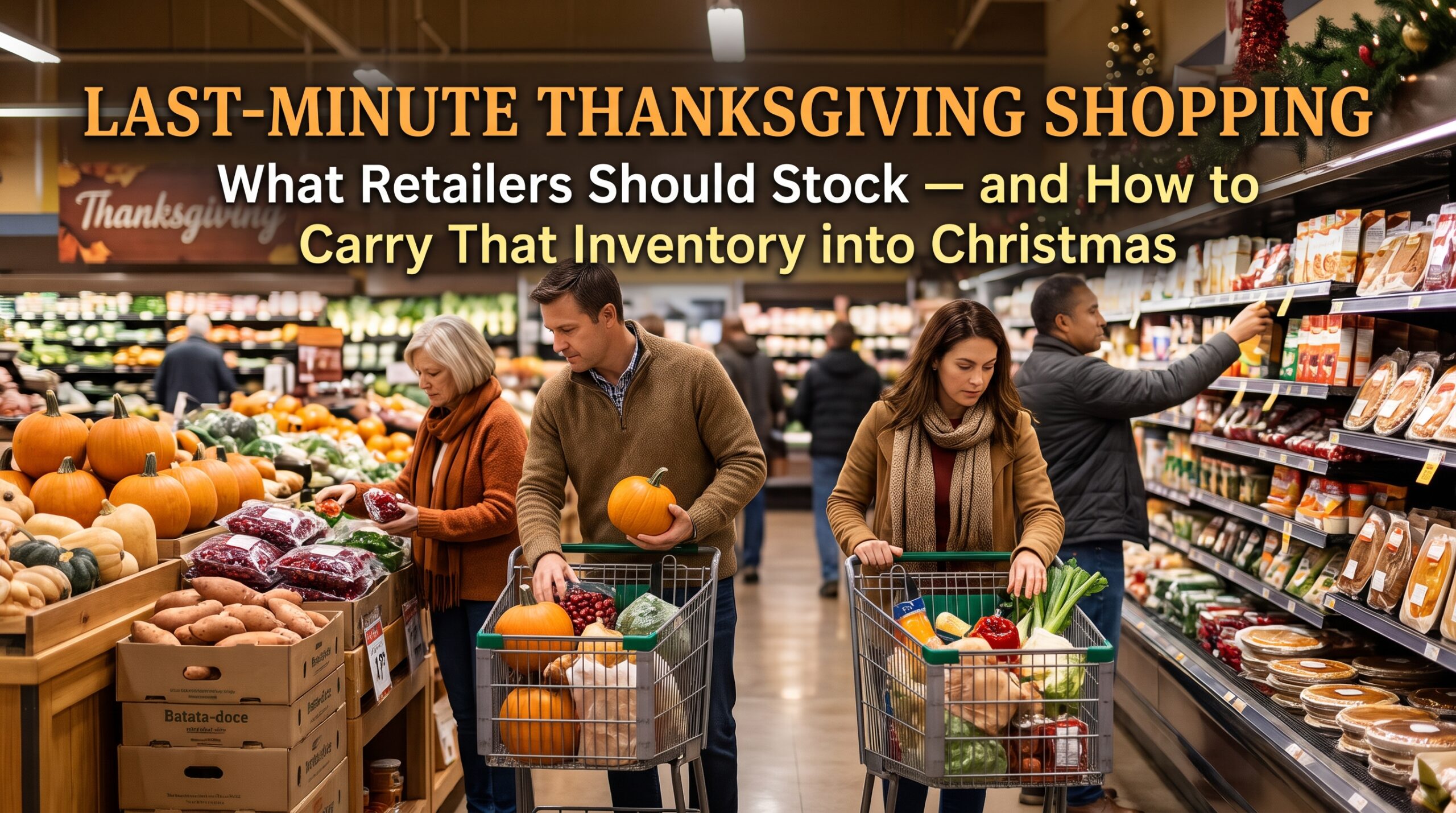
The turkey is on the menu, the guests are confirmed, and the recipe is open on someone’s phone. Then comes the realization: there’s no butter. Or broth for the gravy. Or a roasting pan big enough for the bird.
For shoppers, it’s a race against the clock. For supermarkets, specialty food stores, and convenience stores, it’s an opportunity to solve a real problem—as long as the product is available.
And this isn’t just an impression from watching the checkout lines. According to a DoorDash analysis of 2025 orders, Thanksgiving Eve was the platform’s busiest grocery shopping day of the year, surpassing Christmas Eve and Super Bowl Sunday. Orders peaked at 5 p.m. local time.yahoo
The message for retailers is clear: preparations may begin weeks in advance, but some shopping happens when the celebration is practically at the door.
Last-Minute Shoppers Aren’t Just Looking for Products—They’re Looking for Solutions
An emergency purchase may involve only a few items, but those items can make all the difference to someone preparing a holiday meal.
Butter completes the mashed potatoes. Broth goes into the gravy. Ready-made pie crust solves the dessert dilemma. A food container makes it possible to bring a dish to someone else’s home.
DoorDash’s analysis illustrates this behavior: popular Thanksgiving Eve purchases included sweet potatoes, brown sugar, marshmallows, frozen pie crusts, pecans, and vanilla extract. On Thanksgiving Day itself, shoppers ordered butter, chicken broth, gravy, and whipped cream.yahoo
For retailers, it makes sense to organize inventory around the tasks shoppers need to finish—not just individual products.
1. Butter, Broth, and Seasonings: Small Items That Deserve Priority
The most important purchase isn’t always the centerpiece of the meal. Supporting ingredients also become part of the last-minute rush.
In DoorDash’s order analysis, dried sage, fresh rosemary, and fresh thyme stood out among Thanksgiving Eve purchases. Butter, chicken broth, and nutmeg appeared among holiday purchases.yahoo
When putting together a last-minute essentials selection, consider:
- Salted and unsalted butter.
- Chicken and vegetable broth.
- Ready-made gravy and gravy mixes.
- Sage, rosemary, thyme, cinnamon, and nutmeg.
- Salt, pepper, and other basic seasonings.
- Cream and alternatives suited to your customers’ preferences.
One merchandising idea is to create a “Last-Minute Holiday Essentials” display, with clearly marked prices and replenishment checks throughout the day.
Having a case in the stockroom isn’t enough. Shoppers need to find the product on the sales floor.
2. Side-Dish Ingredients: Help Shoppers Complete the Menu
Mashed potatoes, stuffing, vegetables, and sweet potato dishes are part of the traditional Thanksgiving lineup. In FMI—The Food Industry Association’s 2026 holiday survey, dishes such as turkey, mashed potatoes, stuffing, and hot vegetable sides gained popularity compared with the previous year.supermarketnews
For your assortment, consider:
- Potatoes and sweet potatoes.
- Onions, garlic, carrots, and celery.
- Stuffing mixes.
- Frozen and canned vegetables.
- Cranberry sauce.
- Marshmallows and brown sugar for sweet potato dishes.
Offer different price points and package sizes. FMI’s survey found that 45% of consumers were very or extremely concerned about rising holiday food prices. Availability and affordability therefore need to work together.supermarketnews
A useful display can bring together the ingredients for a side dish while keeping every item available for individual purchase.
3. Desserts: Stock Ingredients for Bakers and Shortcuts for Everyone Else
Some shoppers will make their pies from scratch. Others only need a ready-made crust. And some will remember, on the way to dinner, that they’re responsible for dessert.
DoorDash’s list of last-minute purchases included frozen pie crusts, pecans, vanilla, brown sugar, and whipped cream.yahoo
Based on those signals, consider serving two types of shoppers:
| For Shoppers Who Will Bake | For Shoppers Who Need a Shortcut |
|---|---|
| Pie crusts | Ready-made pies |
| Pecans and other nuts | Frozen desserts |
| Brown sugar and vanilla | Cakes and cookies |
| Filling ingredients | Whipped cream and toppings |
| Chocolate and spices | Individual desserts |
This is a suggested inventory mix, not a sales ranking. The balance between ingredients and ready-made products should reflect your store’s sales history, available space, and storage capacity.
4. Roasting Pans, Aluminum Foil, and Thermometers: Don’t Overlook Kitchen Essentials
A holiday meal also depends on items that don’t appear on the ingredient list.
In the orders analyzed by DoorDash, disposable roasting pans recorded a 2,100% increase on Thanksgiving Eve. On Thanksgiving Day, orders for food thermometers rose by more than 3,600%. The article reporting these figures does not specify the exact comparison baseline. These numbers indicate a surge within the platform—not growth rates for the entire retail market.yahoo
For your last-minute selection, consider:
- Disposable roasting pans in different sizes.
- Aluminum foil and parchment paper.
- Food thermometers.
- Food-safe containers and packaging for leftovers.
- Serving platters, plates, cups, and napkins.
- Can openers and basic kitchen utensils.
The opportunity lies in reminding shoppers of something they haven’t yet realized they’re missing. A display near holiday meal ingredients can do that without requiring a complicated promotion.
5. Beverages and Shareable Snacks: Round Out the Shopping Trip
DoorDash’s analysis also found increased orders for sparkling grape juice and nonalcoholic apple cider on Thanksgiving Eve, along with alcoholic beverages.yahoo
For your beverage and entertaining assortment, consider options that accommodate different guests:
- Still and sparkling water.
- Juice, soda, and nonalcoholic sparkling beverages.
- Coffee and tea.
- Alcoholic beverages, where permitted by licensing requirements and local regulations.
- Cheese, toast, crackers, nuts, and dips for appetizers.
The goal doesn’t have to be an enormous assortment. A focused selection that is easy to find and suited to your customer base can be a practical approach.
Why Does Keeping Inventory Available Matter?
The Holiday Meal Remains a Budget Priority
In FMI’s survey, only 17% of consumers said they would cut spending on food for holiday meals if necessary. By comparison, 46% would reduce spending on clothing, and 45% would cut spending on concerts and events. The survey included 1,467 U.S. grocery shoppers in September 2026.supermarketnews
That doesn’t mean shoppers have stopped comparing prices. It means the holiday meal holds an important place in their year-end spending decisions.
For retailers, the practical takeaway is to combine product availability with affordable alternatives rather than focusing exclusively on premium options.
Demand Can Concentrate in the Final Hours
DoorDash’s historical data shows grocery orders peaking at 5 p.m. on Thanksgiving Eve and 11 a.m. on Thanksgiving Day. These are patterns observed on the platform in 2025—not an automatic forecast for every store in 2026. Still, they offer a reference point for reviewing replenishment, staffing, and order-handling capacity.yahoo
If your store opens on the holiday, plan who will check shelves, pick orders, and update product availability across digital channels.
Organized Displays Are Also Part of the Solution
When FMI asked how supermarkets could make holiday preparations easier, 29% of consumers mentioned special holiday meal displays, while 25% cited displays organized around specific dishes.supermarketnews
One way to respond is to create small solution-focused stations:
- For mashed potatoes: potatoes, butter, and seasonings.
- For pie: crust, filling ingredients, and toppings.
- For serving and storing: roasting pans, aluminum foil, and food containers.
- For a quick appetizer: crackers, nuts, and accompaniments.
The goal is to make products easier to find—not to require shoppers to buy an entire bundle.
From Thanksgiving to Christmas: The Same Inventory Can Serve Two Celebrations
The advantage of planning November with December in mind is building an assortment with more than one selling occasion.
The idea is not to overbuy and hope to clear the excess at Christmas. It is to prioritize products that can serve both celebrations, provided their shelf life, storage requirements, and expected demand support that plan.
Here are some possibilities:
| Category | Thanksgiving Use | Potential Christmas Use |
|---|---|---|
| Sugar, flour, and vanilla | Pies and desserts | Cookies, cakes, and Christmas desserts |
| Cinnamon and nutmeg | Pies and side dishes | Holiday sweets and beverages |
| Nuts and pecans | Pies and snacks | Cheese boards, desserts, and food gifts |
| Broths and sauces | Gravy and side dishes | Roasts, sauces, and other dishes |
| Chocolate and coffee | Desserts and after-dinner service | Recipes, gift baskets, and coffee stations |
| Aluminum foil and roasting pans | Cooking and transporting holiday dishes | Roasts and December gatherings |
| Food containers | Storing leftovers | Transporting and storing holiday food |
These are suggested uses, not guarantees of inventory turnover. Their potential depends on your customers’ habits and each product’s condition.
What Is the Advantage for Retailers?
An integrated plan creates three potential business advantages:
- Reduce dependence on a single holiday. A versatile product can remain relevant after Thanksgiving.
- Refresh displays using some inventory already on hand. Products presented as “pie-baking essentials” can become part of a “Christmas cookies and desserts” selection.
- Base December replenishment on actual gaps. After Thanksgiving, retailers can check remaining inventory before placing new orders.
These are potential inventory-management benefits, not proven percentage savings for an individual store. Turning them into results requires monitoring sales, margins, expiration dates, and cash tied up in inventory.
The Essential Caution: Carryover Inventory Shouldn’t Become Dead Stock
Not every product left over in November should sit on the shelf waiting for December.
To manage the transition, consider separating products into three groups:
- Longer-lasting products: review expiration dates and storage conditions before including them in your Christmas campaign.
- Refrigerated and frozen products: strictly follow the manufacturer’s storage instructions and stay within equipment capacity.
- Short-shelf-life perishables: plan for near-term sales rather than counting on demand weeks later.
It is also worth prioritizing neutral packaging in categories intended for both holidays. Products with highly Thanksgiving-specific branding need their own sell-through strategy.
Well-stocked does not mean stocked to the maximum. It means having the right items available in quantities your operation can sell and store properly.
The Store That Solves Today’s Problem Can Become Part of the Next Celebration
For someone who forgot the butter, the best store at that moment is the one that has butter. For someone transporting a pie, it is the store with the right container.
Last-minute Thanksgiving shopping shows how basic ingredients, kitchen essentials, and convenience can come together in a single purchase.
For retailers, the opportunity is to meet that urgent need while preparing an organized transition into December: carry forward suitable products, replenish what actually sold, and keep seasonal enthusiasm from turning into excess inventory.
Christmas doesn’t have to start with an entirely new stock order. It can start with a better-planned inventory.
Frequently Asked Questions About Last-Minute Thanksgiving Inventory
What should retailers stock for last-minute Thanksgiving shoppers?
Prioritize ingredients that help shoppers finish their holiday meals, including butter, chicken and vegetable broth, gravy, potatoes, stuffing mixes, pie crusts, brown sugar, vanilla, and whipped cream. DoorDash’s analysis of 2025 holiday orders identified many of these products among Thanksgiving Eve and Thanksgiving Day purchases.yahoo
Round out the selection with practical essentials such as roasting pans, aluminum foil, food thermometers, and containers for leftovers.
When does last-minute Thanksgiving grocery demand peak?
According to DoorDash’s analysis, grocery orders peaked at 5 p.m. local time on Thanksgiving Eve and 11 a.m. on Thanksgiving Day in 2025. Thanksgiving Eve was also the platform’s busiest grocery shopping day of that year. These findings reflect activity on DoorDash, not every retailer’s sales patterns, but they provide a useful reference for staffing and replenishment planning.yahoo
Why is keeping holiday essentials in stock important?
Last-minute shoppers often need a specific ingredient or utensil to complete their meal. Having those essentials available helps retailers meet an immediate need.
Holiday food also remains a spending priority. In FMI’s 2026 survey, only 17% of consumers said they would reduce spending on holiday meal food if necessary, compared with 46% who would cut clothing purchases and 45% who would reduce spending on concerts and events.supermarketnews
Should retailers offer budget-friendly options?
Yes—affordable choices should be part of the holiday assortment. FMI found that 45% of consumers were very or extremely concerned about rising holiday food prices. Consider offering different package sizes and price points so shoppers can choose options that fit their budgets.supermarketnews
How can retailers make last-minute shopping easier?
Organize displays around dishes or tasks, such as “Mashed Potato Essentials,” “Everything for Your Pie,” or “Serve, Store, and Take Home.”
This approach aligns with consumer preferences reported by FMI: 29% of respondents wanted special holiday meal displays, and 25% wanted displays organized around specific dishes. Keep prices clear and allow customers to purchase each item separately.supermarketnews
Which Thanksgiving products can also be sold during the Christmas season?
Consider versatile products such as flour, sugar, vanilla, spices, nuts, chocolate, coffee, aluminum foil, roasting pans, and food containers. These are suggested carryover categories because they can support multiple holiday preparations—not guaranteed bestsellers.
Before moving any remaining inventory into a Christmas promotion, check expiration dates, storage requirements, packaging, and your store’s sales history. The goal is planned continuity, not simply holding unsold merchandise.
How much extra inventory should retailers order?
The data cited in this article does not establish a universal ordering percentage. DoorDash’s findings describe platform activity, while FMI’s survey describes consumer attitudes; neither provides a store-specific sales forecast.
Base additional orders on your own sales history, current inventory, supplier lead times, storage capacity, and expected demand. Products suitable for both Thanksgiving and Christmas may offer more flexibility, but that does not justify overbuying.
What is the biggest advantage of planning Thanksgiving and Christmas inventory together?
The potential advantage is flexibility: suitable products can serve more than one selling occasion, displays can be refreshed using inventory already available, and December orders can focus on actual gaps.
However, the sources cited here do not quantify savings from this strategy. Track sell-through, margins, expiration dates, and remaining stock to determine whether the approach benefits your store.